

Pharmaceutical companies outsource a great deal of work to service providers, from clinical trial recruitment to medical writing to brand campaigns, but finding the right agency for a given project has always been challenging. Ekarnia set out to create a B2B platform where pharma teams could search a tagged database of thousands of service providers across dozens of disciplines, compare them on verified data points, and shortlist with confidence.
Unfortunately, Ekarnia is no longer live as the company wound down for commercial reasons. Images are blurred in places to protect IP. This project was undertaken in my role as Principal UX Consultant at Cambridge Agency Group.
Choosing the right tools in discovery to bring an open brief into focus
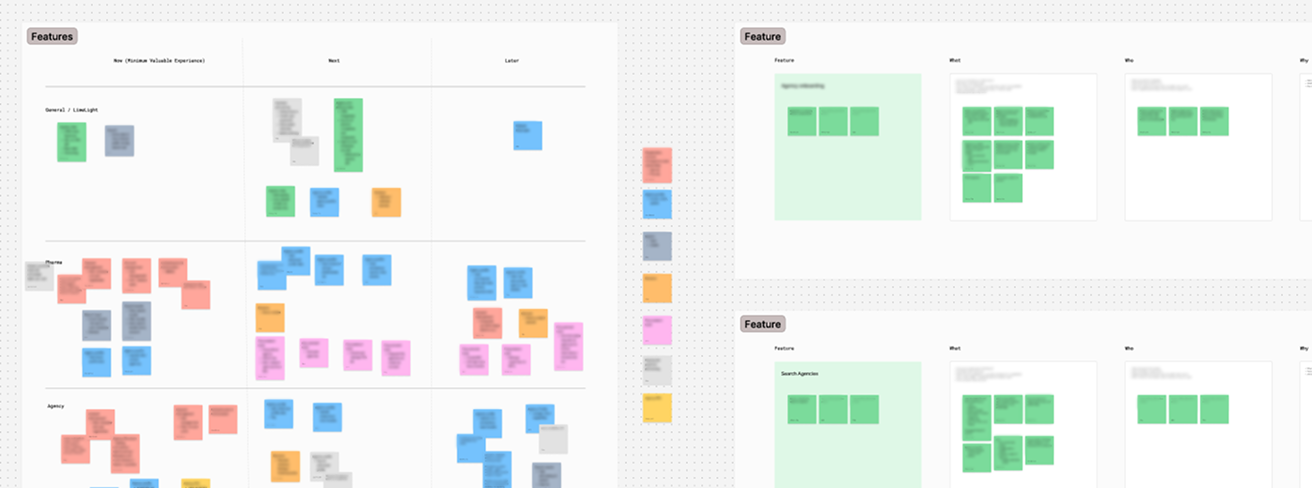
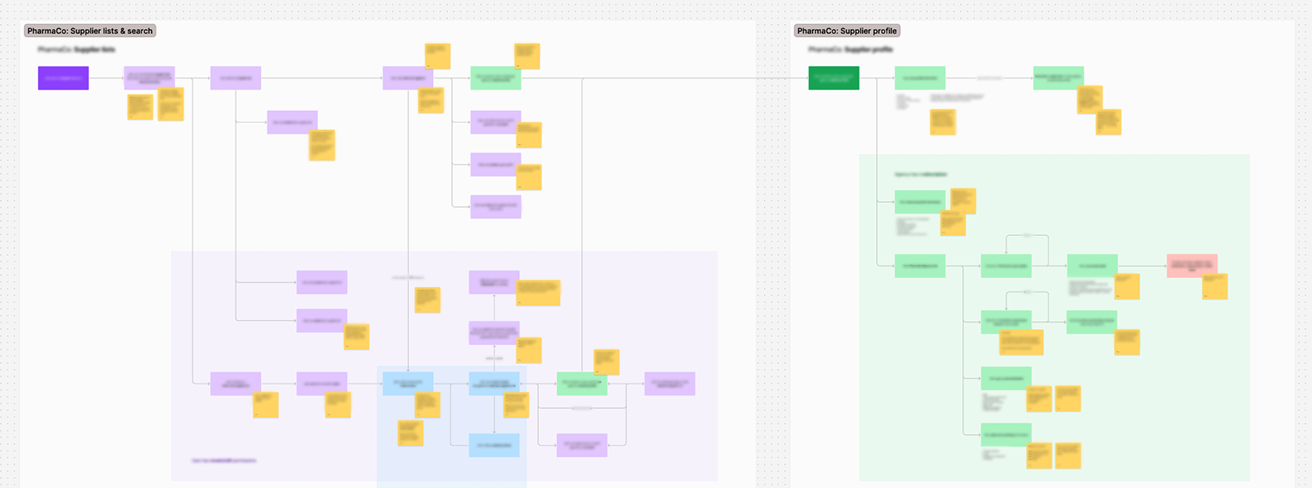
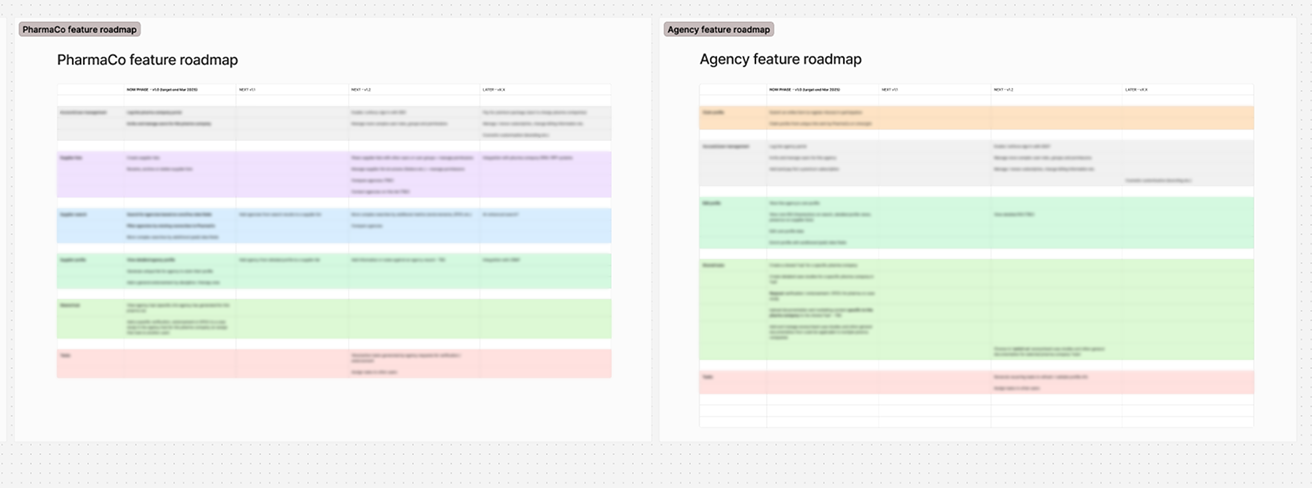
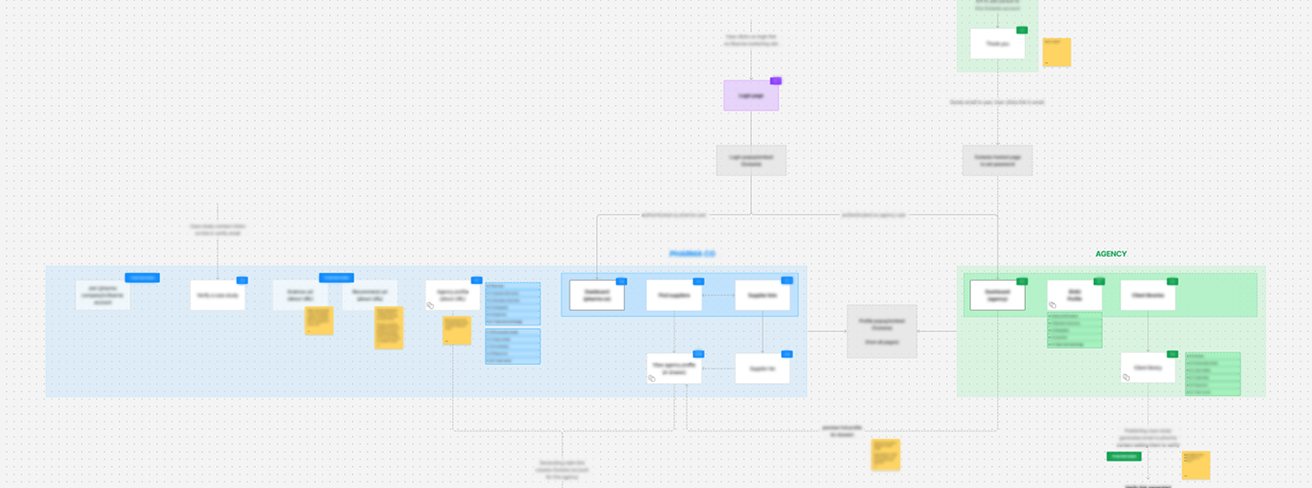
The brief was a big one: define a product serving pharma teams, service providers, Ekarnia’s own administrators and, in the background, its investors. Rather than commit to a fixed discovery process up front, I picked the tool or activity that matched the current need, moving from workshops and brainstorming through to a service blueprint and then a feature roadmap as our understanding firmed up.
The commercial context shaped that roadmap throughout. This needed to be a genuine MVP, but one that could measure and demonstrate ROI to subscribers from day one, and support tiered subscriptions as the product grew.
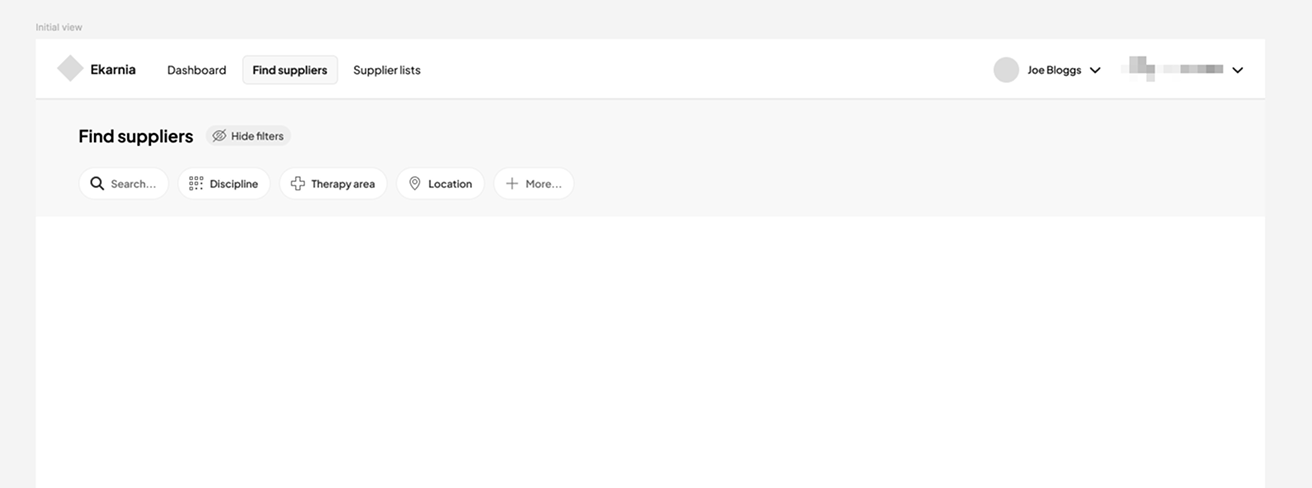
Search at the core of the product: an original approach that made complex query construction feel simple and intuitive
Complex search tends to result in a cluttered, technical interface. However, Ekarnia had to be immediately usable by a new user with no training, while also being able to cope with a genuinely complex data model: many search dimensions, each with its own shape and range of options. And users needed to be able to instantly see, understand and adjust the search options that they’d selected to optimise the results.
Search is generally a solved UX problem, but none of the established patterns quite fit the need here. After various iterations, I developed a solution that felt familiar and intuitive, and addressed all of Ekarnia’s specific needs.
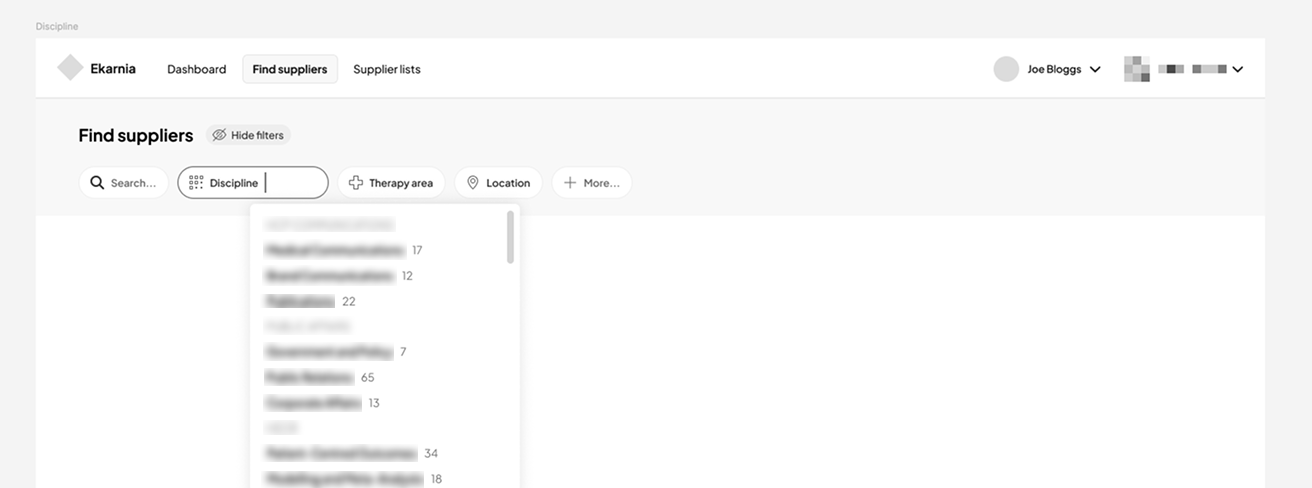
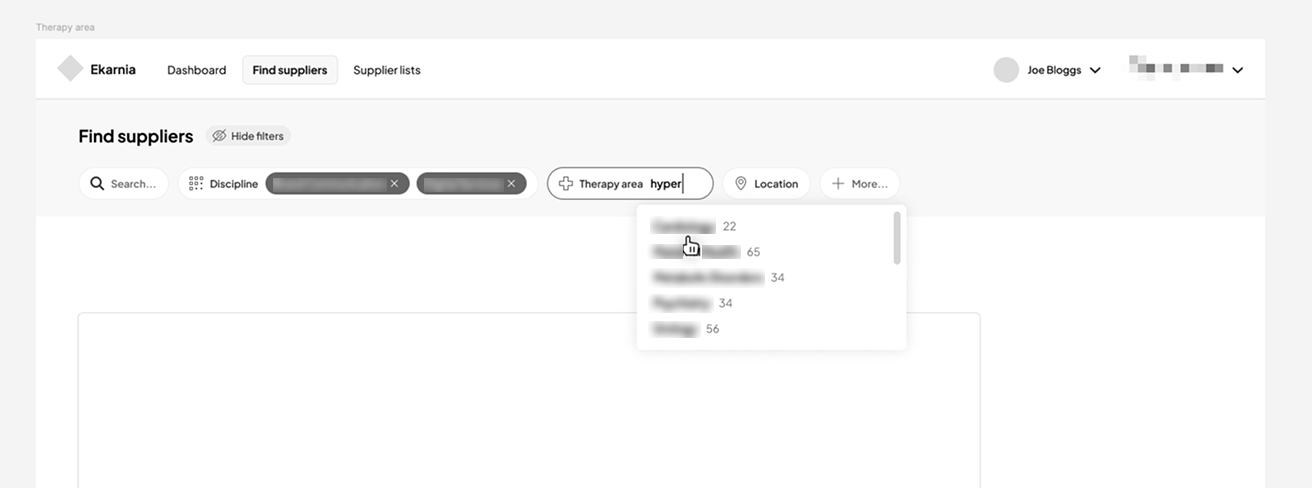
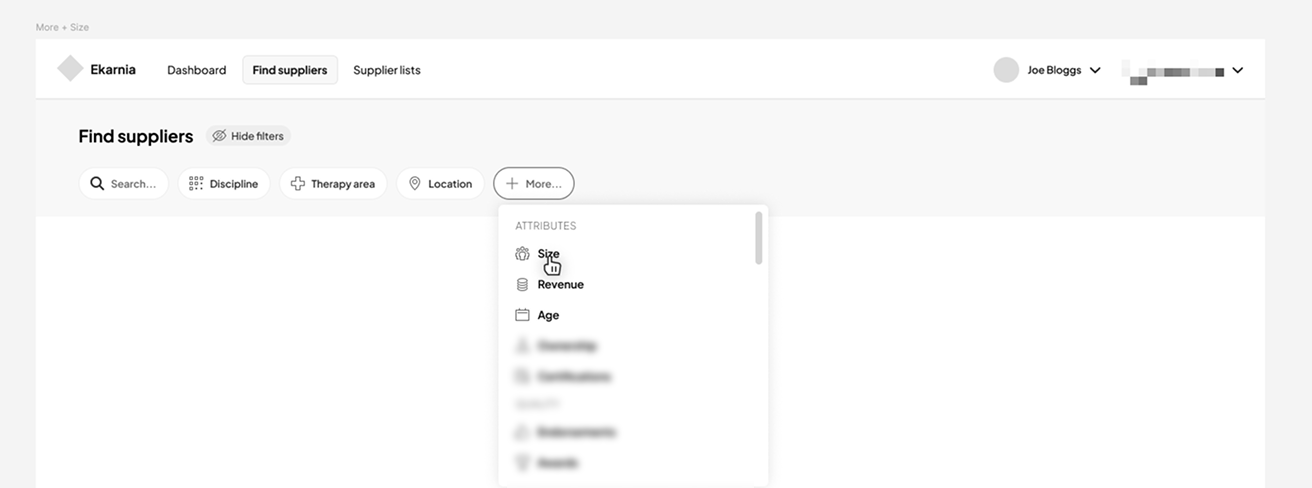
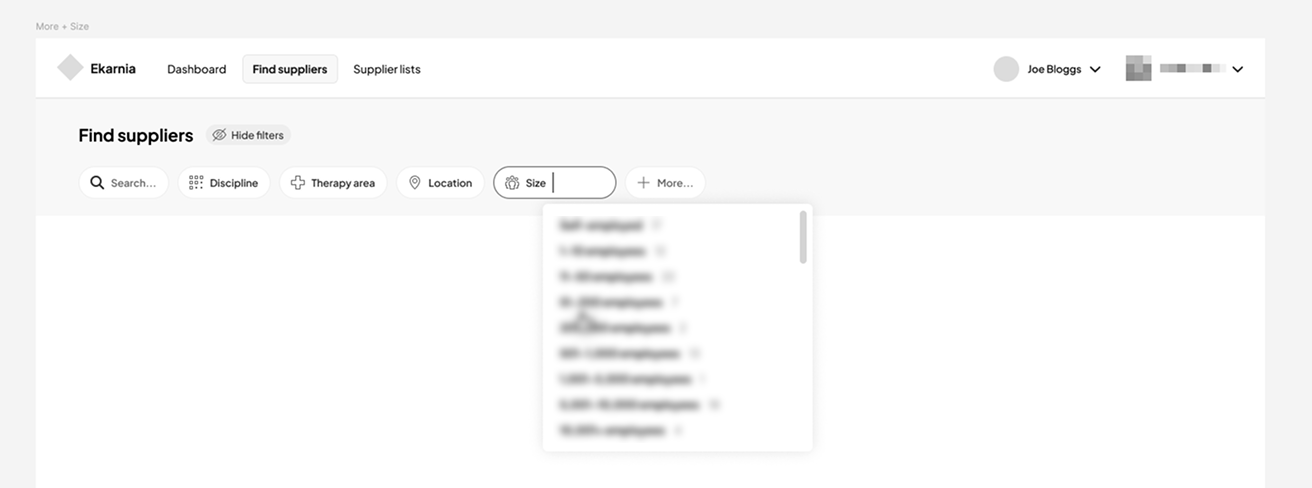
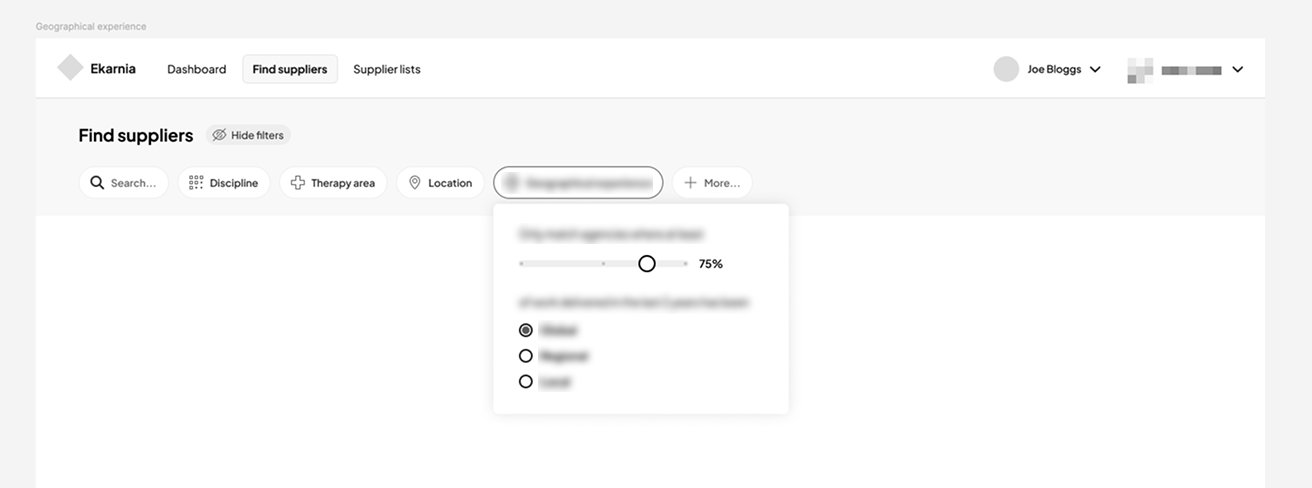
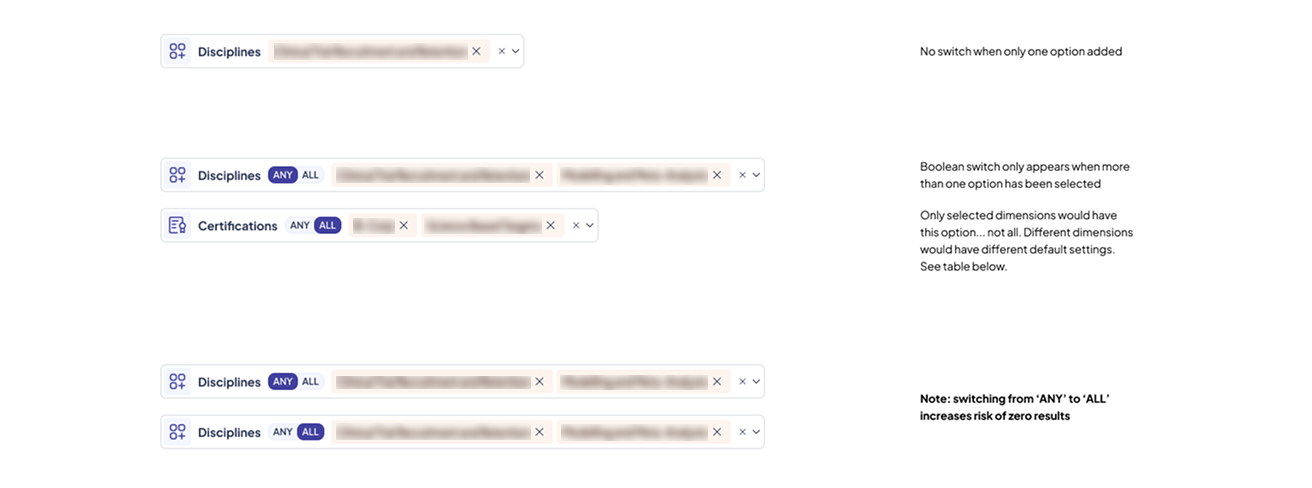
For search with multiple dimensions or facets, boolean logic is always a challenge, and it’s important to ensure that users understand how their choices will impact the result set. I designed a novel inline switch that allowed users to toggle between ANY and ALL matches within each dimension.
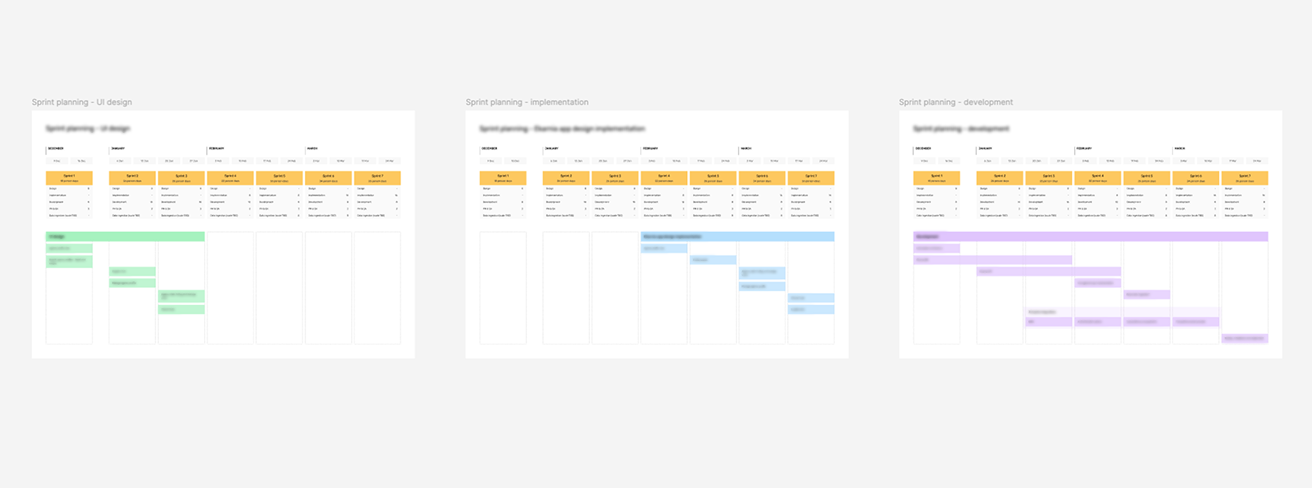
350+ wireframes across 9 UX design sprints: staying in low fidelity to enable exploration at scale
The client was in continuous conversation with prospective pharma and service-provider customers while the UX thinking was progressing, so functionality, features, interaction and the feature roadmap were shifting constantly. Each conversation sharpened the MVP, but it meant that I had to be agile, and able to pivot quickly.
I planned 5 initial core UX design sprints, each with a defined feature scope; 10 weeks of controlled work to establish core interaction patterns, and key features and flows before briefing the UI design team to start work. I followed that up with an additional 4 smaller UX design sprints, running in parallel with the UI design work, to pick up ongoing changes and new requirements in low-fidelity. Once agreed, these changes were briefed into the UI design team.
Throughout this process I stayed close to the client, maintaining and communicating a clear picture of the complexity and surfacing what each new requirement touched, which flows it changed, and what was still unresolved, so decisions were made with the whole product in mind. It was something the client returned to repeatedly in their feedback: the attention to detail I brought, and the difference it made in holding a complicated product together while it was still moving.
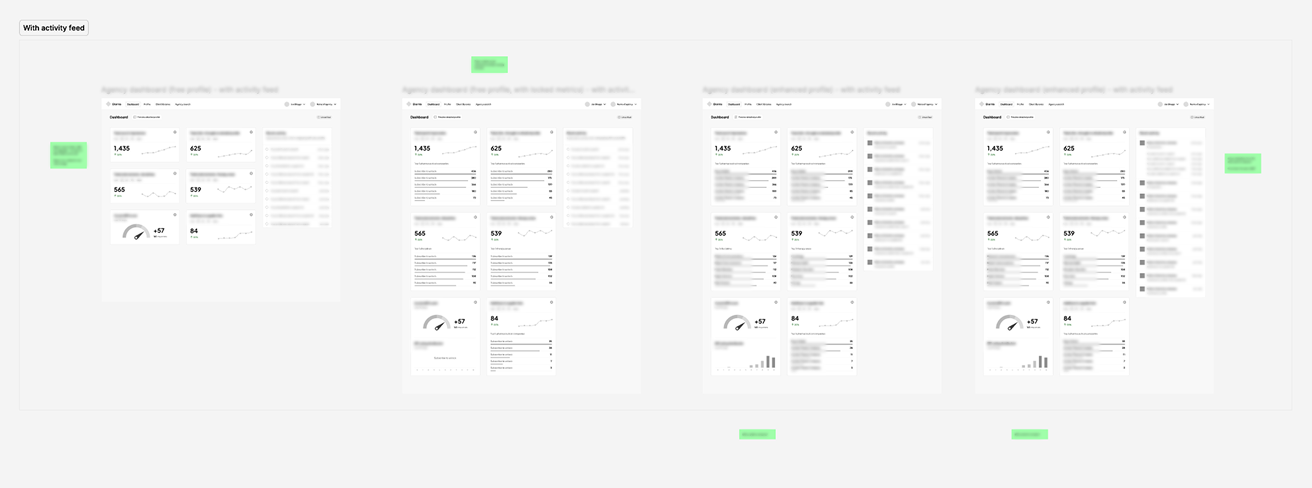
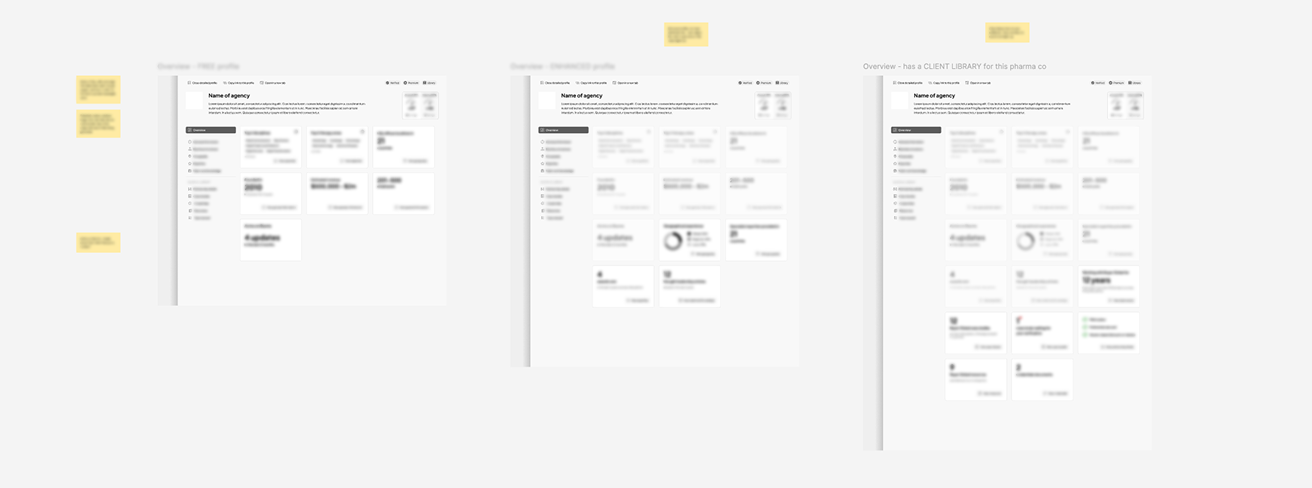
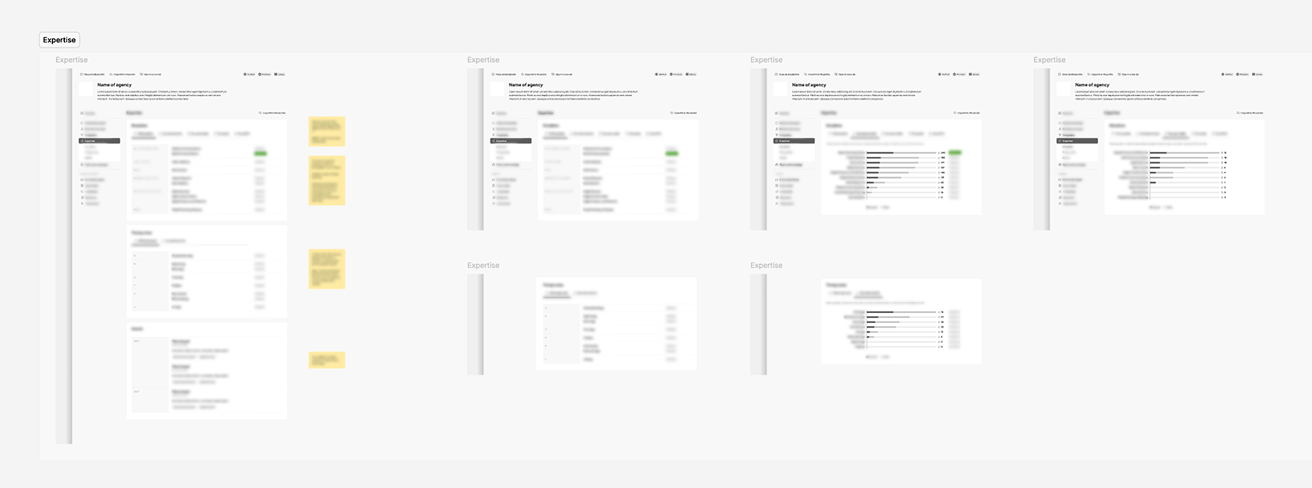
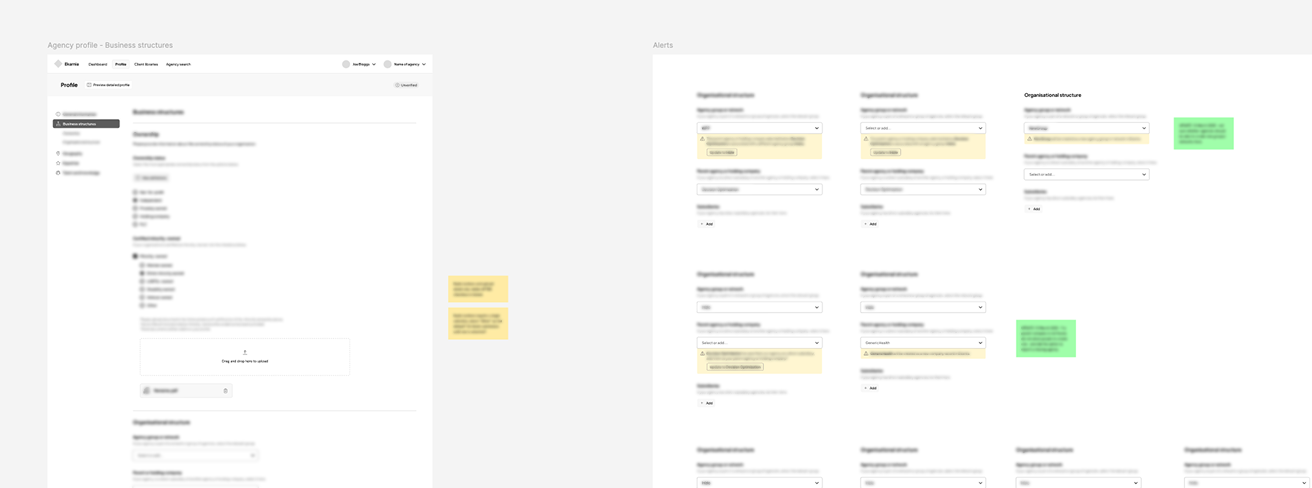
Designing the product to onboard, guide and convert its own users
With a small team at the client end, the product had to do as much of its own onboarding, hand-holding and commercial work as possible.
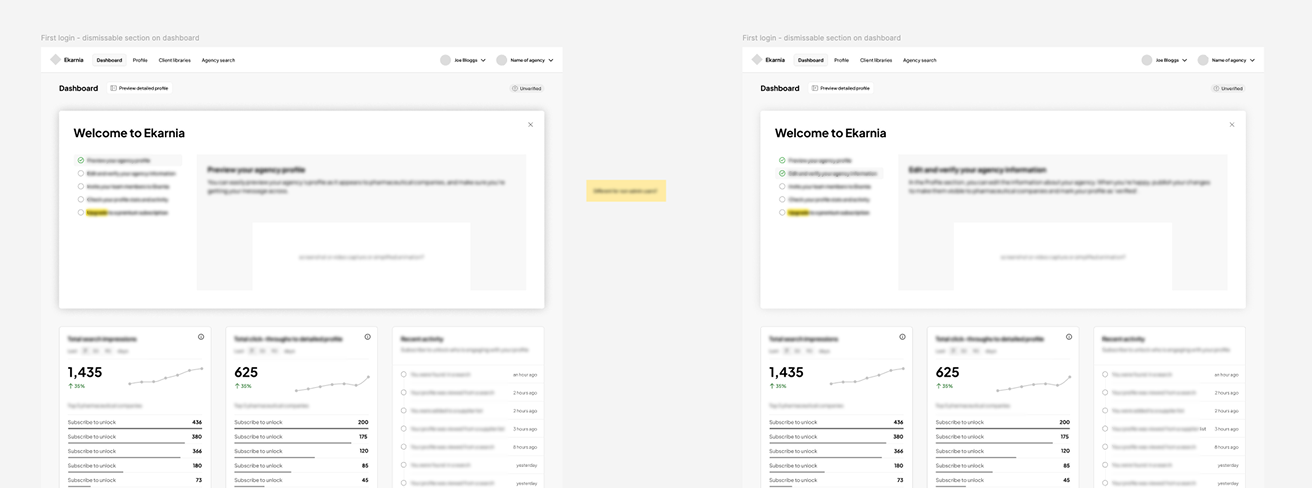
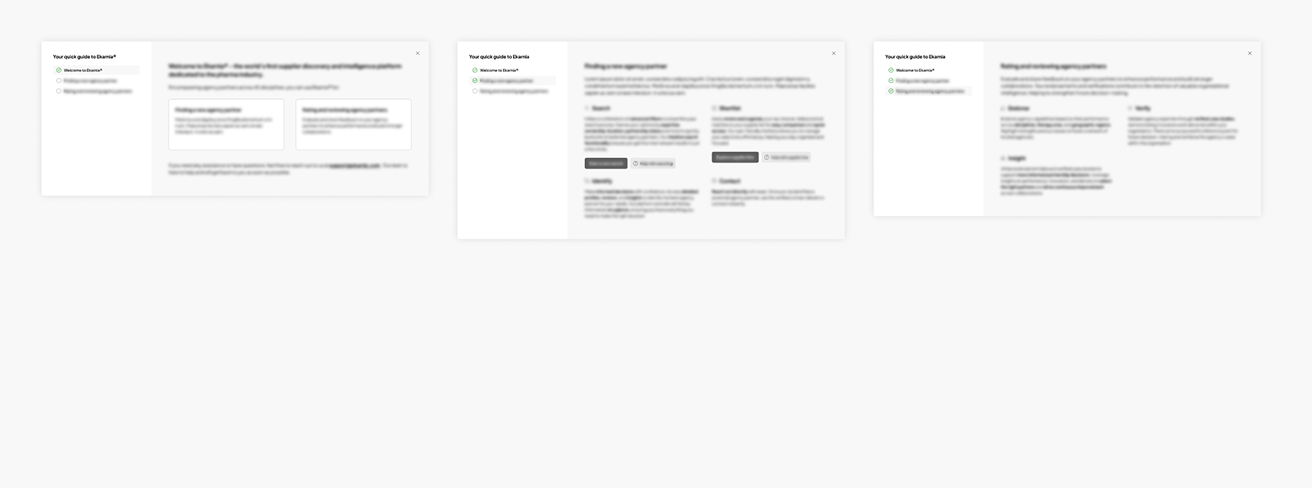
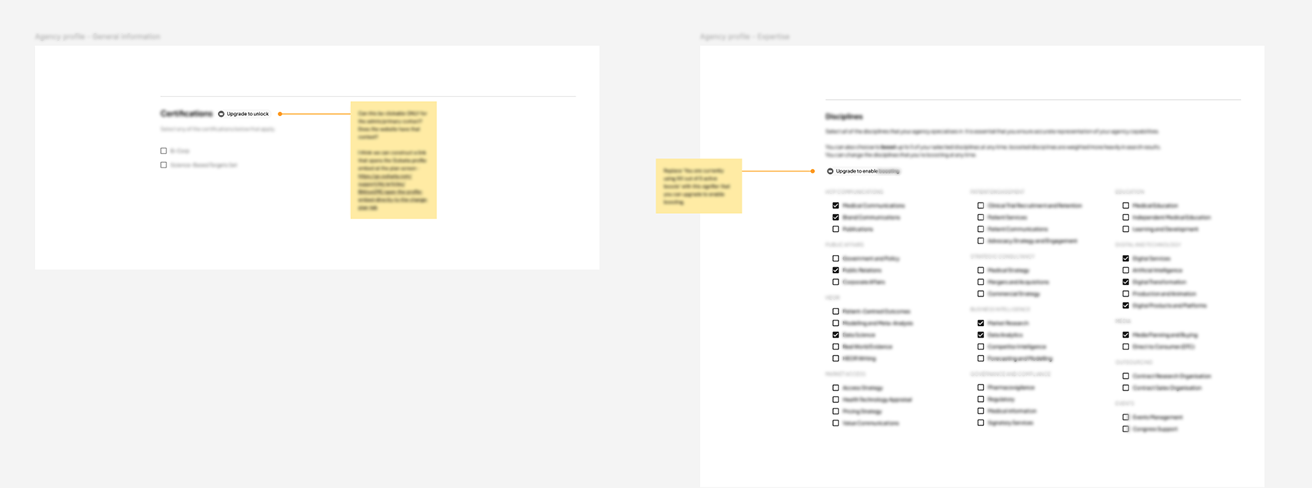
I designed useful but unobtrusive onboarding guides, visible to users on first login, giving them clear information about the product and how to get the most from it. At lower subscription tiers, additional value and features were suggested or hinted at, giving people a stronger pull to upgrade to higher tiers.
The same thinking covered data quality, guiding users to correct their own records, and to report gaps or inaccuracies.
Continuing to add value into design, build and QA
In addition to the discovery and UX design work, I also planned the UI design and build sprints, briefed the design team, and stayed involved with input and feedback as the visual work developed.
I then ran end-to-end QA on the functional user flows, testing against the design intent and producing annotated documentation of the tests to ensure the MVP was complete, error-free and ready for launch.
Mike was an outstanding thought partner throughout the creation of Ekarnia. His UX expertise, proactive approach and responsiveness helped transform ideas into an intuitive, user-centred platform. He consistently challenged our thinking in the right way and was a genuine extension of the team. I’d highly recommend Mike to anyone looking to build exceptional digital experiences.